
The Battle for BC
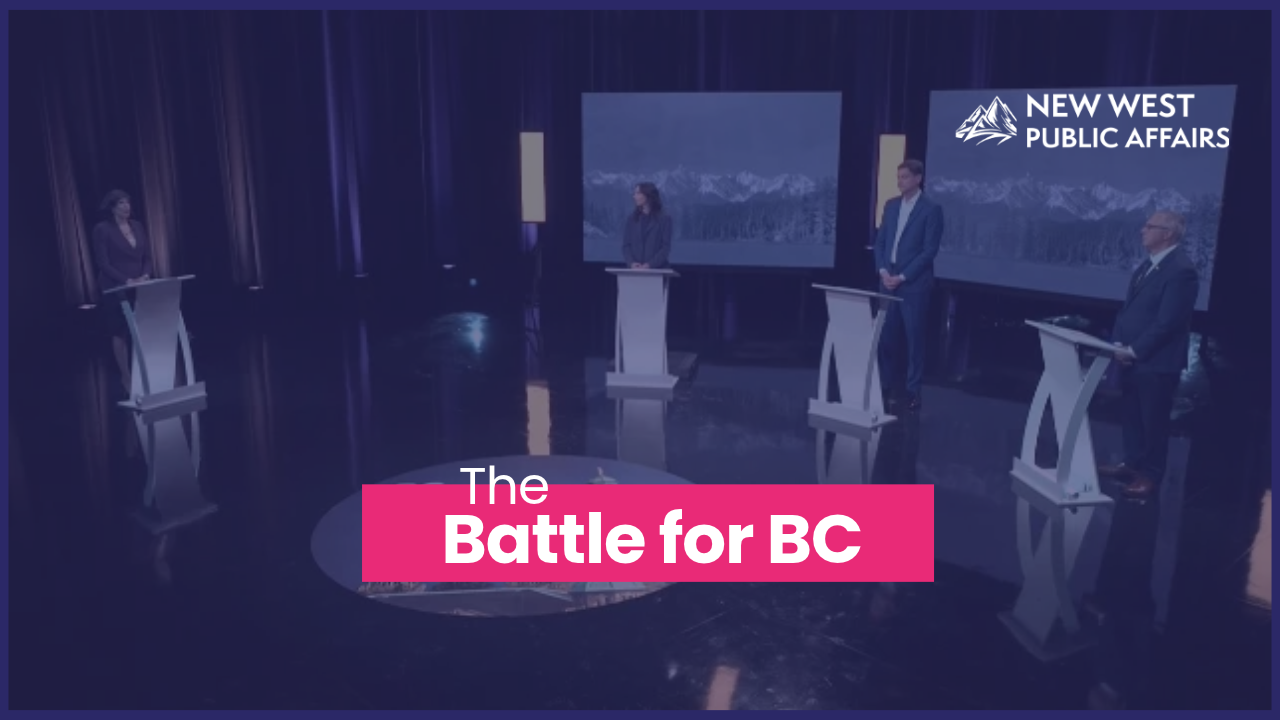
The Debate That Could Matter, and Mostly Didn’t
Tonight’s leaders’ debate was the only one of the campaign, and a major opportunity for party leaders to win over British Columbians before advance voting begins.
By this point in most campaigns, voters have made up their minds, and memorable moments don’t always translate into shifts at the ballot box, but this election could be different. Going into the debate, Research Co. found 15 per cent of British Columbians are still undecided, nearly double the eight per cent at the same point two years ago. With the NDP trailing the Conservatives in recent polling, an interim Conservative leader facing his first real test, and a new Green leader on the main stage for the first time, there was more room than usual for a single night to move the needle.
Three leaders took the stage: NDP Leader David Eby, interim Conservative Leader Lorne Doerkson and Green Leader Emily Lowan. Eby looked the most comfortable of the three, which is no surprise from a sitting premier with a previous campaign and debate behind him.
The tone was set early. Eby was pressed on whether his snap election call was an opportunistic power grab and defended it as necessary given his government’s one-seat majority. That’s a notable pivot from the early days of the campaign, when he framed the election as a mandate to stand up to Trump, and reflects how much the race changed after Kerry-Lynne Findlay’s last-minute exit as Conservative leader.
For much of the debate, Eby ran against the past, contrasting his record with the B.C. Liberal years from 2001 to 2017 and warning that uncosted Conservative promises would lead to deep cuts. Doerkson tried to pull the focus back to the NDP’s decade in office, but struggled when asked directly what he would cut to pay for a $1,000 tax cut and new public safety spending.
Lowan, at just 25 years old and without a seat in the legislature, landed one of the cleanest shots of the night, framing voters as stuck on a merry-go-round of NDP broken promises and Conservative service cuts. She made the case that voters are tired of choosing between two familiar options and positioned the Greens as a potential balance of power in a minority.
Doerkson, by contrast, left openings on the table. The NDP’s cancelled $1,000 household grocery rebate, first pitched as cash relief for families during the last campaign and then shelved as the deficit grew, was a ready-made example of a broken promise, yet it was Lowan, not Doerkson, who raised it. The province’s record $13.8 billion deficit, arguably the Conservatives’ strongest line of attack, got only a passing mention from him. Instead, he spent much of the night responding to Eby rather than setting the agenda.
Like most debates, stretches of the night devolved into crosstalk, and several exchanges, particularly on ICBC’s no-fault model and the court rulings around the Declaration on the Rights of Indigenous Peoples Act, drifted into territory only close political watchers would fully follow.
Centre BC and OneBC, both newcomers since the 2024 election, aren’t running enough candidates to qualify for the debate, but their leaders shared short video messages. Centre BC pitched itself as a centrist check on whichever party forms government, while OneBC promised steep tax cuts and a hard line against reconciliation agreements. Neither is a contender to govern, but with dozens of candidates each, both could pull votes from the Conservatives in tight ridings, and in a close race, that could be enough to tip a seat.
Whether any of tonight’s moments landed with voters still making up their minds, and whether average British Columbians came away with a clearer picture of their choices, won’t be clear until the ballots are counted.
Advance polls open Friday, Oct. 16, and run through Wednesday, Oct. 21, ahead of final voting day on Saturday, Oct. 24.
New West Public Affairs is following the BC election closely and is ready to help clients make sense of the dynamic and changing landscape in the province.